

For project owners and boards, a high-rise building is one of the most risk-dense investment decisions they will make. Contract values are large, durations are long, and a delay on the lower floors ripples through every floor above. For this reason, construction management on a high-rise project is not an administrative function but a governance mechanism that keeps the investment within the approved cost, time and quality envelope. This article explains what CM controls, what role it plays at each stage, and the practical steps you can take to apply it in a measurable way.
Why high-rise projects demand a different level of control
High-rise projects demand tighter control because their complexity is layered and self-reinforcing, not merely larger. Unlike low-rise buildings, work proceeds in a vertical sequence: structure, facade, mechanical and electrical systems and finishing each depend on the progress of the floor below.
Five sources of complexity are common. First, the number of disciplines involved: architecture, structure, mechanical, electrical, plumbing, fire protection, elevators and facade, each producing its own drawings and decisions. Second, vertical logistics: constrained sites, limited crane and hoist capacity, and queues of materials that must be scheduled with precision. Third, the interaction with soil conditions and deep foundations, which sets the foundation of the entire schedule. Fourth, working-at-height safety. Fifth, the large number of work packages and subcontractors moving between floors.
Under these conditions, control that relies on habit and verbal communication is quickly overwhelmed. A single small change to a drawing can trigger a chain of effects on cost, schedule and work already installed. This is the space that construction management fills.
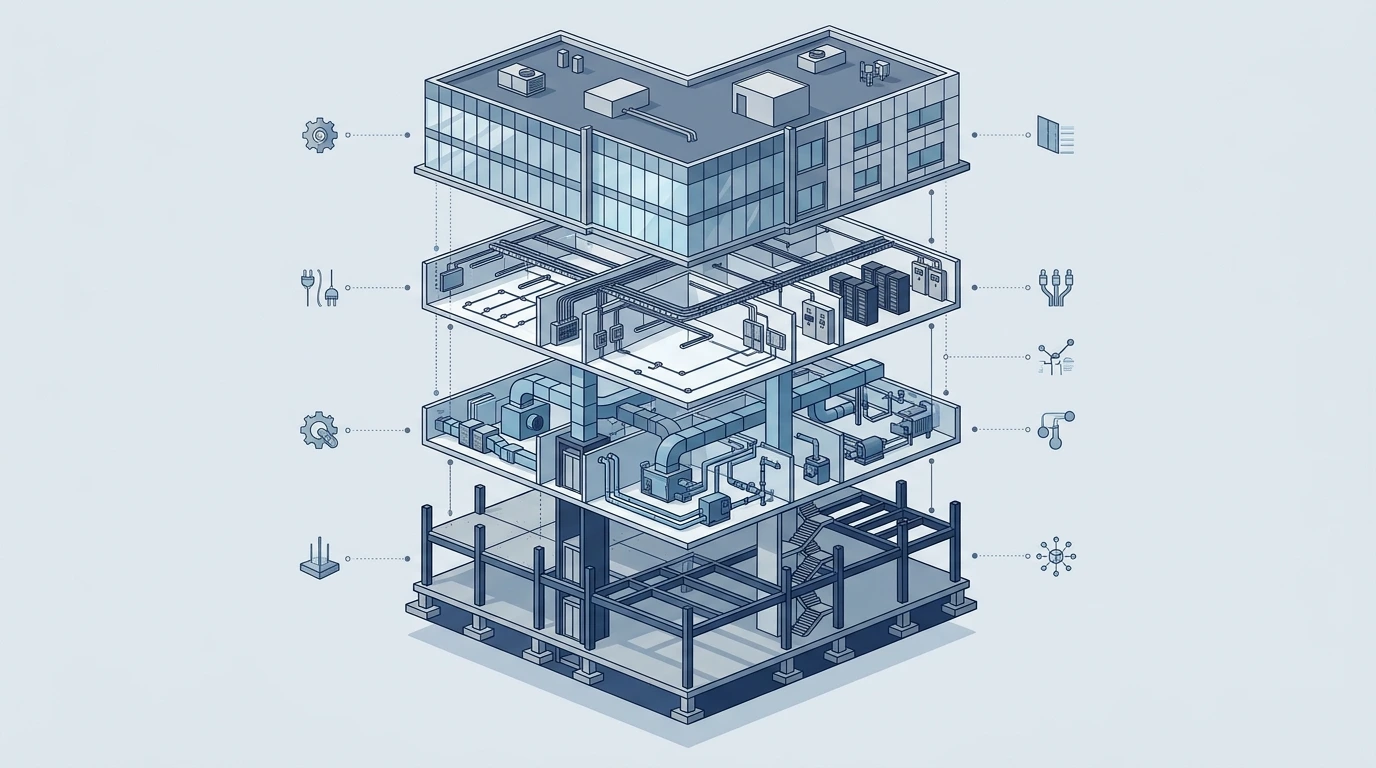
Figure 1. Interdependence between disciplines on a high-rise, where one change affects many work items.
Read Also: Does a Tall Building Need a Strong Foundation? Confirm Ground Conditions with Soil Investigation
What construction management is and how it differs from general project management
Construction management is a professional discipline that plans, coordinates and controls the cost, schedule, quality, safety and risk of a construction project on behalf of the owner, from the design stage through handover. Its main purpose is to ensure that technical decisions and business decisions move in step.
The key difference from general project management lies in the depth of technical construction knowledge and in independent positioning. A construction manager understands site work sequences, construction methods and schedule feasibility, and can therefore assess a contractor's plan critically rather than simply accept reports. The table below summarises the practical differences.
| Aspect | Without structured construction management | With structured construction management |
|---|---|---|
| Progress visibility | Reports differ between parties and arrive late | A single source of progress data, updated regularly |
| Cost control | Variances appear only when invoices arrive | Continuous monitoring against budget and forecast final cost |
| Design changes | Approved verbally, impact not calculated | Processed through a change procedure with impact analysis |
| Discipline coordination | Conflicts discovered on site | Conflicts detected and resolved before execution |
| Reporting to the board | Narrative and inconsistent | Concise, indicator-based, decision-ready |
Six control areas that determine the success of a high-rise project
Effective construction management controls six areas simultaneously, because weakness in one almost always spreads to the others. These six areas can serve as a monitoring framework for executives.
- Cost. Baseline budgeting, commitment tracking and forecast final cost. The measure to watch is the gap between budget, commitments and actuals, not only the amount already paid.
- Schedule. Critical-path scheduling that accounts for floor cycles, crane capacity and material delivery windows.
- Quality. Inspection of materials and work against specifications, including testing and documentation before work is covered by the next trade.
- Risk. A living risk register that records risk owners, impact and mitigation plans, reviewed regularly with management.
- Health and safety. Work-at-height procedures, access control and disciplined incident reporting.
- Documents and communication. Management of drawings, requests for information and approvals so that all parties work from the same version.
The links between these areas are real. Uncontrolled documents lead to installation from outdated drawings, which leads to rework, which in turn erodes cost and schedule at once. Conversely, a risk that is recorded and monitored from the start gives management room to act before a problem becomes a loss.
The role of construction management at every project stage
Construction management delivers the most value when it is involved from the earliest stages, because decisions made during design determine most of the cost and risk that appear later. Engaging CM only during execution makes the function reactive.
| Stage | Construction management focus | Executive decision supported |
|---|---|---|
| Concept and planning | Technical feasibility, initial budget, contract package strategy | Investment approval and contract structure |
| Design and detailed engineering | Constructability review, change control, discipline coordination | Design freeze and change limits |
| Procurement and tender | Package preparation, bid evaluation, scope clarification | Selection of contractors and subcontractors |
| Execution | Control of schedule, cost, quality, safety and changes | Acceleration, adjustment or mitigation |
| Handover | Testing, defect list, final documentation | Acceptance of works and release of final payment |
Combining CM with detailed engineering design, BIM and 3D/4D simulation
Construction management is most effective when supported by well-organised design data, which is where it meets Detailed Engineering Design (DED), Building Information Modeling (BIM) and 3D/4D simulation. Together they turn control from reactive into preventive.
A complete and coordinated DED becomes the single reference for execution and quantity calculation. BIM allows clashes between disciplines, such as a pipe route that collides with a beam, to be detected in the model before materials are ordered. 3D/4D simulation links the model to the schedule so that construction sequence, crane placement and material storage areas can be tested visually. For a construction manager, these tools provide an objective basis for evaluating a contractor's plan.
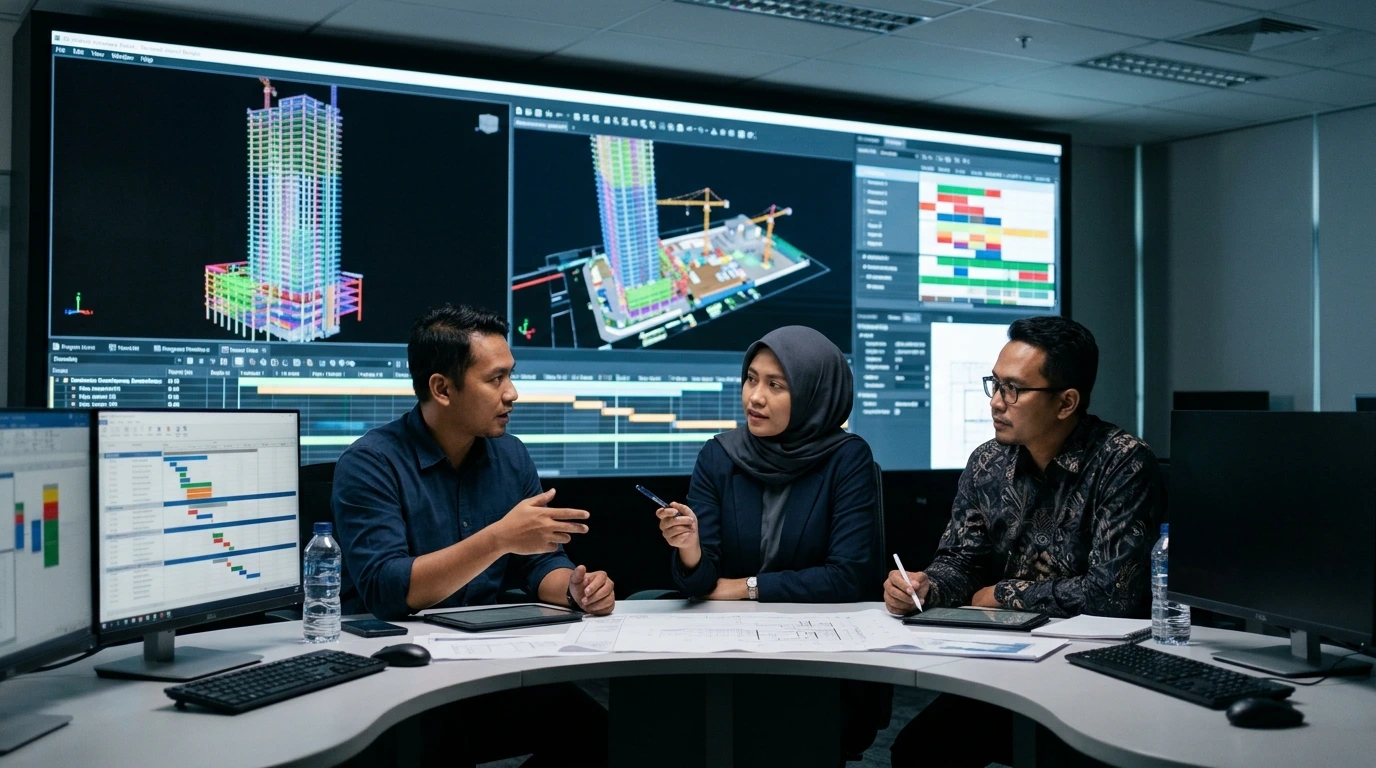
Figure 2. Reviewing a 4D simulation to test construction sequence and logistics before work begins on site.
A decision framework for executives: when and how to apply CM
The decision to apply construction management should rest on the level of complexity and the owner's internal capacity, not on the assumption that CM is an additional cost. The key question is whether your organisation has the people and systems to control a project of this complexity on its own.
Put the following five questions to your internal team before the project starts.
- Do we have an experienced team that has managed multi-discipline, high-rise projects?
- Is there one trusted source of data on cost, schedule and changes?
- Who has the authority to approve design changes, and is the impact calculated before approval?
- Do we need an independent assessment of contractor claims and submissions?
- How quickly can the board receive an accurate picture of project status?
If most answers are weak, that is a strong signal that structured control is needed. Owners can also choose the level of involvement: full CM covering all stages, CM limited to execution, or periodic support in the form of audits and independent reviews. The choice should follow the project's risk profile and available budget.
An illustrative example of the impact of change control
Change control is one of the areas with the clearest return, so it is worth testing with a simple example. The scenarios below are an illustration of the way of thinking only, not data from a real project.
| Scenario (illustrative) | Design change during execution | Impact considered |
|---|---|---|
| Without a change procedure | A revision is requested directly on site | Costs of rework, dismantling and delay become known only after they occur |
| With a change procedure | A revision is submitted, its impact assessed, then approved | Cost and schedule are calculated before the decision, so the board can accept or reject knowingly |
The point is not to prohibit change but to make sure every change is decided with its consequences understood. On a high-rise, a single revision to a typical floor can multiply in impact because it is repeated across dozens of floors.
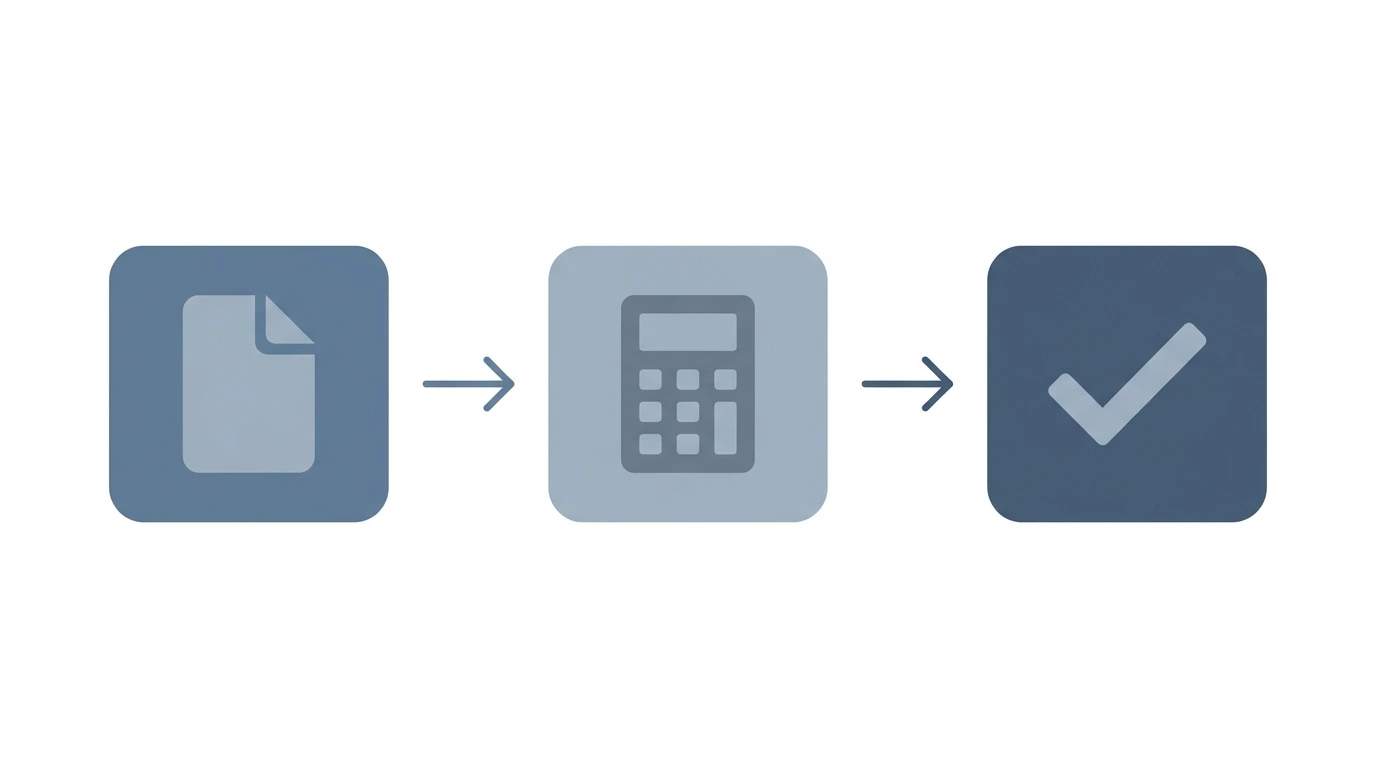
Figure 3. A change control flow that ensures cost and schedule impact is assessed before approval.
Implementing construction management in the first 90 days
Construction management succeeds most often when it starts from a simple governance foundation and expands in stages. The 90-day plan below can serve as a reference.
- Days 1 to 30: set the foundation. Define roles and authority, reporting structure and key indicators. Prepare the baseline budget and master schedule as an agreed reference.
- Days 31 to 60: build the control system. Apply the change procedure, the risk register, and document and request-for-information management. Start regular cross-discipline coordination meetings.
- Days 61 to 90: strengthen and evaluate. Integrate BIM and simulation data into schedule reviews, run periodic executive reports, and evaluate what needs adjusting.
Indicators worth reporting to the board include the cost variance against budget, schedule deviation on the critical path, the number of design changes and their impact, open quality findings, and the safety record. These five indicators are concise enough to read quickly yet informative enough to trigger action.
Read Also: DED Is Not Just a Technical Drawing: This is the Foundation to Ensure Projects Are Not Miscalculated
Implementation risks and governance pitfalls to watch for
Construction management can fail not because of the concept but because its application lacks governance support. Four failures occur most often.
- Engaged too late. CM joins only after problems have occurred and becomes a firefighter.
- Unclear authority. The construction manager makes recommendations but no one decides quickly.
- Reports without action. Reports are produced routinely but never used for decisions.
- Undisciplined data. A system exists, but site parties do not update information on time.
The way to avoid these is to set decision authority from the start, schedule regular decision forums, and make data discipline part of contractual obligations. In this way, construction management genuinely functions as a control instrument and not merely a reporting tool.
Conclusion
High-rise projects demand control that goes beyond informal coordination. Construction management provides it through integrated control of cost, schedule, quality, risk, safety and documents, so that every investment decision is taken with complete and timely data. Its value is greatest when engaged from the design stage, supported by well-organised DED and BIM data, and run with clear decision authority.
One point is often overlooked: good control needs a solid data foundation. Plans, budgets, changes, purchases and site progress must flow through the same system. This is where a platform such as Odoo serves as the digital backbone of the construction management discipline.
A Proven Digital Foundation: Odoo's Achievements Through 2026
Odoo is an integrated business application platform that brings project management, timesheets, purchasing, accounting, approvals and documents into a single database. The figures below are published by Odoo itself and show the scale and maturity of the ecosystem in which your project data lives.
| Indicator | Achievement | Relevance for construction projects |
|---|---|---|
| Users | More than 28 million users worldwide | Used from start-ups to organisations with hundreds of thousands of users |
| Partner network | More than 21,000 partners | Implementation capacity and local support are widely available |
| Official apps | About 50 main applications | Projects, purchasing, accounting, inventory and more in one system |
| Community apps | More than 50,000 community-contributed apps | Room to adapt to industry-specific needs |
| Languages | 31 interface languages | Supports multinational and multilingual teams |
| Global presence | 17 offices in 14 countries, more than 8,000 employees | Continuous product development and support |
| Development | More than 200 in-house developers and a community of about 2,000 developers | A steady cadence of product updates |
In Indonesia, Odoo opened an office in BSD, described as its first office in Southeast Asia. In the press release marking the office's first anniversary (November 2024), Odoo cited 189 active local partners, average annual growth of 91.2 percent, and the title of best-performing market in Asia Pacific for six consecutive years. Localization support such as Xendit, QRIS, e-Faktur and Shopee integrations has also been announced.
How Odoo supports construction management
- Projects and timesheets. Monitor task progress, working hours and profitability per project.
- Purchasing and subcontractors. Control purchase requests, cost commitments and invoices against the budget.
- Accounting. Link actual costs directly to the budget and forecast final cost.
- Approvals and documents. Record change procedures and approvals, and centralise project documents.
Ready to Take Your High-Rise Project Control to the Next Level?
Fujicon Japan supports project owners, developers and contractors in building a construction management framework and applying Odoo as its digital foundation. Let us start with a short conversation to map the complexity of your project and define the most impactful first 90 days. Tell us the project type, number of floors and current stage, and our team will prepare an initial proposal.
- Consult via WhatsApp: +6281122275222
- Visit our website: www.fujicon-japan.com