

If a company wants to have full control over profitability, then production cost calculations must be based on complete and structured data. There are four main components that management levels must understand: Bill of Materials (BOM), Overhead Cost, Work In Progress (WIP), and Variance Cost.

1. Bill of Materials (BOM): The Foundation of Production Cost Calculation
- Main raw materials
- Supporting materials
- Additional components
- Quantity used per product unit
- additional thread
- complementary materials
- packaging materials
- scrap material
- Calculate standard cost per product
- Determining a realistic pricing structure
- Controlling material usage
Without a clear BOM, companies do not really know how much it costs to produce one unit of product.
B. Overhead Cost: The Often Overlooked Expense
- electricity for production machines
- salaries of production supervisors
- machine maintenance
- depreciation of machines
- factory facility costs
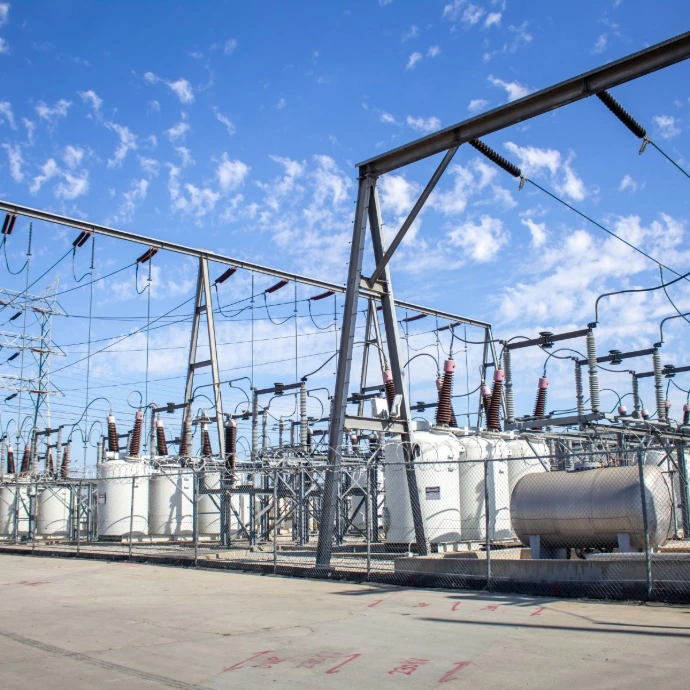
A common mistake is that overhead is calculated globally without a clear distribution to each product. However, each product consumes different resources. For example:
Product A requires the machine for 10 minutes
Product B requires the machine for 45 minutes
If overhead is averaged out, the production cost will become unrealistic. Mature companies typically use approaches such as:
machine hour rate
labor hour rate
activity-based costing
With this method, overhead can be allocated more accurately to each product.
3. Work In Progress (WIP): Unfinished Products Still Have Value
- cutting
- assembling
- finishing
- packaging
For example:
- raw materials that have been used
- labor that has been expended
- some production overhead
- Production costs that appear lower than reality
- Profit margins that appear larger than the actual condition
- Errors in production decision-making
Good management always ensures that the value of WIP is recorded in real-time.
4. Variance Cost: Measuring the Difference Between Plan and Reality
Although the company has standard costs, in practice, production costs often differ from the plan.
- using more material than the standard
- longer production time
- scrap or production defects
- changes in raw material prices

For example:
The standard BOM states that one product requires 2 kg of raw material. However, in actual production, it turns out to use 2.3 kg. The difference of 0.3 kg is the material variance that needs to be analyzed.
Without variance analysis, the company will not know:
Is the production process running efficiently?
Is there material waste?
Are there any issues on the production line?
For management levels, variance analysis is an important tool for controlling costs and improving operational efficiency.
Accurate Production Cost is the Foundation of Profitability.
Competitive manufacturing companies do not only focus on increasing sales. They also ensure that every production cost figure truly reflects the actual operational conditions.
By understanding and managing four main components:
BOM
Overhead Cost
Work In Progress (WIP)
Variance Cost
management can gain a much clearer picture of the profitability of each product.
Without an integrated system, this process is usually done manually through separate spreadsheets, making it difficult to obtain consistent and real-time data.
As a result, more and more manufacturing companies are starting to integrate their entire production process into ERP systems, so that every production activity is recorded directly and can be analyzed accurately.
Ultimately, companies that correctly understand their production costs will have a strategic advantage in pricing, improving efficiency, and maintaining long-term profitability.
Conclusion
Many manufacturing companies feel their margins are shrinking due to market pressures. However, often the real issue is not the selling price, but the lack of clarity in the actual production costs.
Without clear visibility into BOM, overhead, WIP, and variance, management finds it difficult to know where profit is actually generated—and where cost leaks occur.
Fujicon helps manufacturing companies build ERP-based operational controls, allowing the entire production process to be monitored in real-time and every cost to be traced more accurately.
If you want to improve production cost accuracy, operational control, and company profitability, we are ready to discuss with you.
- 📞 Customer Service: 0811 2227 5222
- 📧 Email: dm@fujicon.id
Start with a simple conversation—and discover how an ERP system can help your company make better business decisions.